
- Legal manufacturer: Dongguan Zhuohang Ltd, registration 91441900MA4UWT6X39.
- Turning capacity: 25+ CNC lathes, Swiss-type centers, mill-turn machines, 7+ grinders.
- Facility: 6,800 m², two buildings, 100+ staff, founded 2005.
- Material control: every incoming lot XRF-checked against its mill certificate.
Who is the legal manufacturer behind the brand?
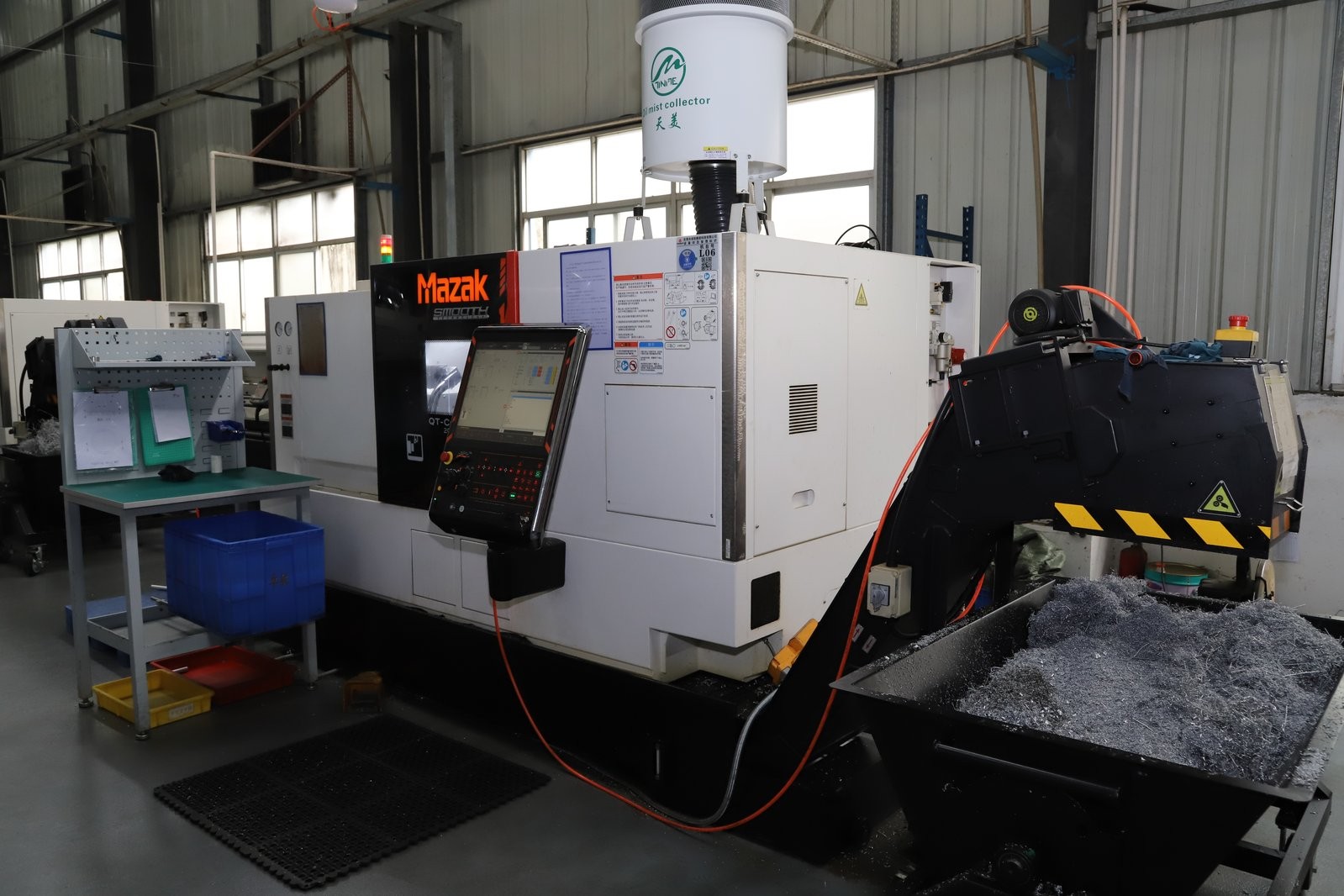
China CNC Turning is a marketing brand. The legal manufacturer is Dongguan Zhuohang Ltd, registration number 91441900MA4UWT6X39, formerly Zhuohang Precision Machining Factory. The name on the certificate, the name on the invoice, and the name on the door are the same — the fastest way to tell a manufacturer from a trading desk.
Founded in 2005 and headquartered in Hengli Town, Dongguan, the company has grown from a small machining shop into a precision factory that runs turning across the full material range. That matters for one practical reason: the machine that turns your brass pin and the machine that turns your titanium shaft live under the same roof, with the same material discipline.
The registration number is the part you should verify, not the part they should take from a website. Run the number against the public registry and the name on the door against the name on the invoice — a manufacturer's legal identity is the one thing a trading desk cannot fake for long. The founding year 2005 matters less as a number than as a record: a shop that has run turning for that long has seen the full material range and the full list of failure modes.
What does the turning floor actually contain?
The turning floor holds 25+ CNC lathes, plus the specialized machines that make a turning shop complete:
| Process | Machines | What it runs |
|---|---|---|
| Swiss-type turning | Citizen Cincom, Star SR, Tsugami | Slender free-machining parts, bar up to Ø32 mm |
| Standard CNC turning | 25+ lathes | General round parts up to Ø720 × 1280 mm |
| Mill-turn | Mazak QT / INTEGREX, Brother M-series | Round parts with cross-holes, flats, slots |
| Precision grinding | 7+ (surface / centerless / cylindrical) | Bearing seats at ±0.002 mm |
The breadth is the point. A slender brass pin belongs on a Swiss machine with a guide bushing; a short 4140 flange belongs on a heavier lathe. Having all of them in-house means the process is chosen for the part, not for whatever machine happens to be free.
Brand names matter for one reason: they tell you which class of machine is under the tool. A Citizen, Star, or Tsugami Swiss machine and a Mazak or Brother mill-turn center are the same machines a buyer would find in a precision shop in Europe or the US, which means the tolerance claim is backed by the same equipment class, not by a no-name lathe that cannot hold it. The machine list is the tolerance claim made physical.
Why does one floor for every material matter?
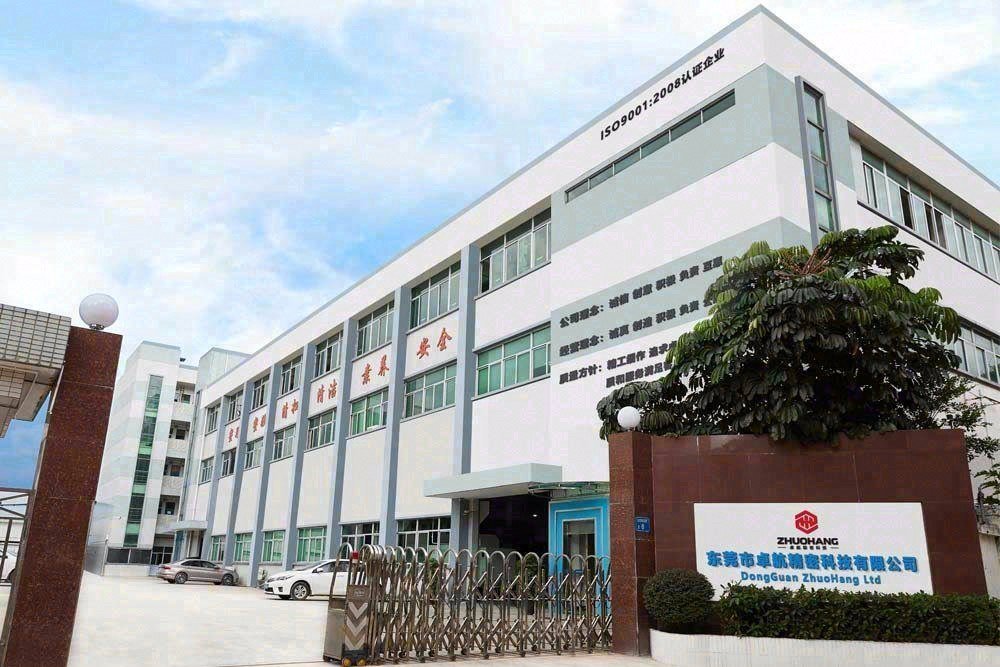
Because material and process are inseparable. A shop that only runs soft metals cannot take your 316 job; a shop that only runs heavy turning cannot hold a slender pin's tolerance. This floor covers the full range — free-machining brass and aluminum, work-hardening stainless, tough alloy steel, and titanium — each on the machine and with the tooling it needs.
The material discipline runs in parallel. Every incoming lot is XRF-checked against its mill certificate before it reaches a spindle, so a 303 bar is never cut as 316 by mistake. When the alloy is the specification — a brass fitting that must conduct, a 316 part that must resist corrosion — the verification is part of the service.
One floor also protects you from the handoff. When a shop subcontracts the alloys it cannot run, your titanium part leaves the building and your control over it goes with it. A floor that runs the full range keeps the material discipline, the inspection, and the responsibility under one roof, which is the only way a "matched to the material" claim survives contact with a real order.
What supports the turning beyond the lathes?
A lathe is only half the story. The factory covers the full metal-cutting range — 100+ production machines including milling and mill-turn — plus an inspection bench with 20+ instruments — Hexagon CMMs, vision measuring machines, an XRF spectrometer, hardness testers, and a salt-spray chamber. Owning the metrology in-house is what lets the shop guarantee a diameter instead of outsourcing the proof.
The 6,800 m² facility sits in a single campus of two buildings — one for production, inspection, and offices, the other for staff dormitory and dining — with 100+ employees, more than 80% of whom are skilled technicians. That continuity is why a prototype and a production run come off the same floor with the same discipline.
Owning the metrology changes the accountability. A shop that outsources inspection can dispute a bad result with its supplier; a shop that owns the CMM owns the number, because the machine and the operator and the record all live in-house. That is why the question "do you own the CMM?" is on every serious audit list — it separates the shop that guarantees a diameter from the one that hopes one.
Which certifications does the factory hold?
Three certificates cover the concerns you audit for, with scope stated honestly:
| Standard | Certificate number | Scope |
|---|---|---|
| ISO 9001:2015 | 116024/A/0001/UK/En | Machining of metal parts |
| IATF 16949:2016 | 131941/A/0001/SM/En | Manufacture of CNC metal machining parts (excludes product design, Clause 8.3) |
| ISO 14001:2015 | 116024/B/0001/UK/En | Environmental management related to machining of metal parts |
Honest scope note: IATF 16949 excludes product design under Clause 8.3 — this is a build-to-print manufacturer. If your program needs design ownership, that is scoped separately, not implied.
How do you audit the turning factory before ordering?
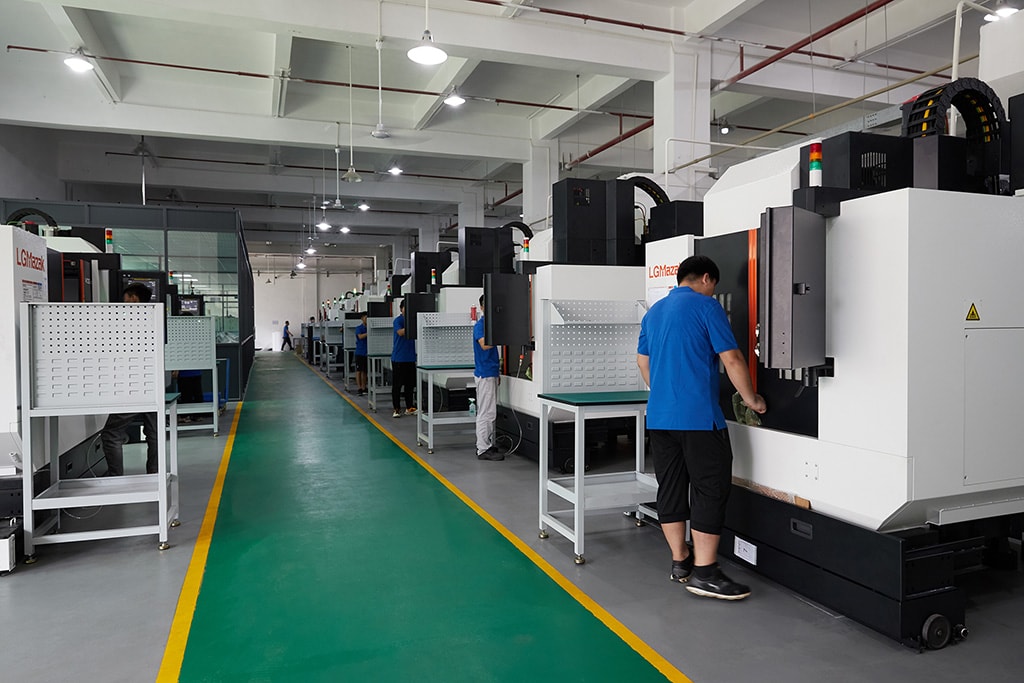
An hour on site answers what no email can. Bring the drawing you care about and check five things:
- The certificate numbers match what the registrar lists for Dongguan Zhuohang Ltd
- The turning machines match the list — Swiss-type, lathes, mill-turn, on the floor and under power.
- The material control is real — ask to see the XRF check against a mill certificate.
- An engineer can read your drawing and explain which machine and tooling your part needs.
- The inspection bench is in-house — a CMM running jobs, not a prop.
Factory visits are welcome at No. 8, Shuibian Songyuan Road, Hengli Town, Dongguan, Guangdong, China 523470 (GPS 23.048947, 113.990605). A manufacturer invites you in; a trading desk deflects.
What does the machine list tell a buyer?
The machine list is the floor's résumé, and it reads like one. The specific models tell you the diameter range, the material range, and the tolerance class the shop can actually hold.
| Machine class | What it proves |
|---|---|
| Swiss-type (Citizen, Star, Tsugami) | Slender small parts, tight diameters |
| Standard lathes (25+) | Broad round-part range up to Ø720 × 1280 mm |
| Mill-turn (Mazak, Brother) | Single-setup turn + mill |
| Grinders (7+) | ±0.002 mm finishing capability |
How does the facility layout support quality?
A 6,800 m² campus split into two buildings — production, inspection, and offices in one, staff dormitory and dining in the other — is a layout decision, not a real-estate detail. Keeping inspection on the production floor means a part goes from spindle to CMM without leaving the controlled environment, which is how a tolerance is checked in the same conditions it was cut.
The 100+ headcount with more than 80% skilled technicians is the second layout fact. Turning is a trade, not a button-press; a technician who has run the full material range knows the difference between a 316 cut and a 6061 cut without being told. That continuity is what keeps a prototype and a production run on the same discipline, on the same floor.
How do you verify a certificate is real?
A certificate is a claim until you check it. Three steps turn a logo into evidence.
- Copy the certificate number — 116024/A/0001/UK/En, 131941/A/0001/SM/En, 116024/B/0001/UK/En — and check it against the registrar.
- Match the scope to the work — IATF 16949 excluding product design (Clause 8.3) is a build-to-print scope, and an honest shop says so.
- Confirm the legal name on the cert matches the name on the invoice and the door.
A shop that hands over the numbers is inviting the check; a shop that shows only a logo is not. The number is the difference.
What should a factory visit checklist include?
An hour on site answers what no email can. Bring the drawing and work the list below.
| Area to check | What to look for |
|---|---|
| Material intake | XRF check against a mill cert, not just a bin of bars |
| Turning floor | The machines under power, not parked for show |
| Inspection bench | A CMM running jobs, not a prop |
| Documentation | Cpk charts and cert numbers, not a binder of logos |
| People | An engineer who can read your drawing and name your process |
How does the factory's history shape its material coverage?
A factory that has run turning since 2005 has accumulated something no new shop can buy: the failure memory of the full material range. Every alloy that work-hardened, every chip that gummed a tool, every tolerance that drifted with temperature has been seen, recorded, and turned into a program and a tooling choice. That memory is what lets the floor route a new 316 job to the right machine on the first try, instead of learning on your order.
The machine mix grew the same way. The Swiss machines came when slender parts outgrew the general lathes; the mill-turn centers came when round parts started carrying milling features; the grinders came when hardened parts needed a finishing act. The floor is not a catalog of machines — it is a record of the materials and shapes buyers actually asked for, answered in steel.
That is what "one floor for every material" really means: not that every machine can cut every alloy, but that every alloy in the range has a machine, a tooling set, and a history waiting for it. The difference shows in the first article, not in the brochure.
How does the floor schedule one-offs and production runs side by side?
A factory that takes MOQ 1 and also runs production volumes has to schedule two very different animals on the same machines. A one-off prototype needs a setup, a program, and a first-article check, then it is gone. A production run needs a proven setup that repeats for thousands of cycles. The floor keeps both honest by treating the material as the scheduling variable.
A free-machining prototype can often be slotted into a spare window between runs, because it cuts fast and the setup is short. A difficult alloy pulls its own time: a 316 or titanium prototype needs a slower cut, more insert changes, and a closer watch, so it gets scheduled like a small run rather than a quick job. The material, not the batch size alone, decides how the job is placed.
For production, the scheduling logic inverts. The cutting time dominates, so the material's machinability rating becomes the cost lever — a 12L14 run that shaves seconds per part over ten thousand parts is a real saving, which is why screw-machine work concentrates in the free-machining grades. The same floor schedules a one-off by setup cost and a run by cycle time, and the material is the input to both.
What does raw material intake look like on this floor?
Material control starts before the first cut, at the intake door. Every incoming lot arrives with a mill certificate and is XRF-checked against it, so the bar that reaches a spindle is the alloy the drawing named. The intake step also decides the blank form — round bar, cold-drawn section, or near-net — because the blank is the material's first physical form.
| Material family | Common intake form | Verification |
|---|---|---|
| Aluminum | Round bar, cold-drawn | XRF vs mill cert, heat number logged |
| Stainless steel | Round bar, cold-drawn | XRF vs mill cert, heat number logged |
| Carbon / alloy steel | Bar, sometimes near-net forging | XRF vs mill cert, hardness spot check |
| Brass / copper | Round bar | XRF vs mill cert |
| Titanium | Bar, near-net for high volume | XRF vs mill cert, lot traceability |
The heat number is the thread that ties the intake to the finished part. It links the bar to its cert, to the XRF reading, and finally to the inspection report that ships with the parts. A blank of unknown origin breaks that thread, and no amount of downstream measurement can re-tie it, which is why the intake check is the first quality gate, not the last.
What this shop actually runs
Ask for capability evidence and the answer should be specific. The facility behind this guide runs 100+ CNC machines on a 6,800 m2 floor in Dongguan, China, with 100+ staff. The machine list, by category:
- 5-axis machining centres (10+) - Mazak VARIAXIS I-600 (510/910/510 mm travel, 12,000 rpm, 22 kW, 71.6 N·m, 30-tool BT40) and Mazak INTEGREX I-250H S (B-axis 0.0001°, 24 kW, 124 N·m, 38-tool HSK-A63). Typical work: compound-angle parts, single-setup multi-face prismatic work, and aerospace fittings where datum transfer loss is unacceptable.
- 3-axis / 4-axis machining centres (50+) - Brother SPEEDIO S500Z2N / S700Z2N (10,000 rpm, 14/21-tool ATC, 0.7 s tool-to-tool, Z-axis 2.2 G) and Mazak VCE-430A L / VCE-570C L (10,000 rpm, 118 N·m, 24-tool ATC). Typical work: prismatic parts, plates, brackets, housings.
- Swiss-type turning centres (10+) - Citizen Cincom A20-3F7 (Φ20 mm, 10,000 rpm), TSUGAMI B0206-III / B0205-III (Φ20 mm, 0.1 µm), STAR SR-32JII / SR-32J Type N (Φ32 mm, 8,000 rpm). Typical work: long, slender rotational parts at ±0.002 mm.
- CNC turning centres (20+) - HEADMAN T70M/1250 (720 mm swing, 117 mm bore, 3,000 rpm, BMT75 12-station turret). Typical work: shafts, bushings, flanges up to ±0.002 mm.
- Wire EDM (5+) - Sodick AQ535L (550/350/300 mm travel, ±20° taper, 800 kg workpiece). Typical work: hardened tool steel, internal splines, sharp internal corners that milling cannot reach.
- Inspection: Hexagon CMM + 20+ gauges - Hexagon CMM for coordinate measurement, plus vision system, profilometer, hardness tester, coating thickness gauge, XRF for material verification. The 10:1 rule (gauge 10x more accurate than the band) is applied to every feature.
- Machine highlights - VARIAXIS I-600: one-setup multi-face 5-axis + MAZA-CHECK auto-calibration; INTEGREX I-250H S: DONE-IN-ONE mill-turn, B-axis 0.0001° + Ai thermal shield; SPEEDIO S500Z2N / S700Z2N: Z-axis 2.2 G + 0.7 s ATC; Swiss-type: guide-bush switchable + 0.1 µm resolution.
Tolerances held: milling ±0.003 mm, turning ±0.002 mm, grinding and wire EDM ±0.002 mm. Capability: Ppk >= 1.67 initial and Cpk >= 1.33 in production on key characteristics.
Certifications: ISO 9001:2015 (116024/A/0001/UK/En), IATF 16949:2016 (131941/A/0001/SM/En, clause 8.3 design excluded, disclosed openly) and ISO 14001:2015 (116024/B/0001/UK/En), issued to Dongguan Zhuohang Ltd, USCC 91441900MA4UWT6X39, established 2005.
Service area: Austria, Belgium, the Czech Republic, Denmark, France, Germany, Greece, Hungary, Ireland, Italy, the Netherlands, Spain, Sweden and the United Kingdom in Europe; Brazil, Canada, Mexico and the United States in the Americas; China, Israel, Japan, Singapore and Sri Lanka in Asia; Australia and New Zealand in Oceania; and South Africa in Africa — built in China, shipped worldwide.
Contact: Felipe Iglesias, [email protected], +86 13126536955.
Audit the turning floor before you order
Email [email protected] or call +86 13126536955 to book a visit or request the machine list and certificates.
Frequently Asked Questions
Who is the legal manufacturer behind the brand?
In short, Dongguan Zhuohang Ltd, registration number 91441900MA4UWT6X39, formerly Zhuohang Precision Machining Factory. The name on the certificate, the invoice, and the door all match — a consistency you should verify before paying.
How many turning machines run on the floor?
25+ CNC lathes, plus Swiss-type turning centers (Citizen Cincom, Star SR, Tsugami) and mill-turn multi-tasking centers (Mazak QT and INTEGREX, Brother M-series), with 7+ grinders, as part of 100+ production machines.
Which materials can the floor turn?
Aluminum, stainless steel, carbon and alloy steel, brass, copper, titanium, and magnesium, plus engineering plastics. Each incoming lot is XRF-checked against its mill certificate before it reaches a machine.
How large is the factory?
6,800 m² across two buildings in one campus — one for production, inspection, and offices, and the other for staff dormitory and dining — with 100+ employees, more than 80% of whom are skilled technicians.
What certifications does the factory hold?
ISO 9001:2015 (116024/A/0001/UK/En), IATF 16949:2016 (131941/A/0001/SM/En), and ISO 14001:2015 (116024/B/0001/UK/En), all issued by URS. The IATF 16949 scope excludes product design under Clause 8.3, so this is a build-to-print manufacturer.
Where is the factory located?
No. 8, Shuibian Songyuan Road, Hengli Town, Dongguan, Guangdong, China 523470, with GPS coordinates 23.048947, 113.990605. Factory visits and audits are welcome at this address for a physical inspection.
Can I visit or audit the factory?
Yes. Visits and audits are welcome at No. 8, Shuibian Songyuan Road, Hengli Town, Dongguan. You can inspect the machines, the inspection bench, and the documentation before placing an order.
How do I start a turning project?
Email a STEP or IGES file plus a toleranced 2D drawing with the material called out to [email protected]. A design-for-manufacturing review and quote are returned, flagging any manufacturability issues before you commit.
Continue reading: China CNC Turning Services · China CNC Turning Parts Manufacturer · China CNC Turning Quality Control
Standards referenced on this page
- ASTM A582/A582M-12 — Standard Specification for Free-Machining Stainless Steel Bars
- ASTM A276/A276M-17 — Standard Specification for Stainless Steel Bars and Shapes
- ISO 9001 — Quality management systems — Requirements